
Model Context Protocol (MCP) has become a buzzword in AI communities, sparking discussions across social media platforms, where explainers, debaters, and memers alike share their insights. A quick search on Google or YouTube reveals a wealth of content dedicated to MCP, indicating a high level of interest and excitement. But what exactly is MCP, and why is it generating such enthusiasm? The answer lies in its potential to revolutionize how AI models interact with external data and tools. If models are only as effective as the context they receive, then a standardized mechanism for context augmentation is crucial for enhancing their capabilities.
Prerequisites
To fully grasp the significance of MCP, a basic understanding of Large Language Models (LLMs) and their interaction with external tools is essential. Familiarity with how LLMs process information and leverage tools will enhance your comprehension of MCP’s role in the AI ecosystem.
Introduction to MCP
Launched in November 2024 by Anthropic as an open-source protocol, MCP facilitates seamless integration between LLM applications and external data sources and tools. This protocol has already led to the development of innovative applications, such as Blender-MCP, which enables Claude to interact directly with Blender, facilitating prompt-assisted 3D modeling, scene creation, and manipulation.
One Protocol to Rule Them All
Protocols are sets of rules that govern data formatting and processing. MCP, as its name suggests, is a protocol designed to standardize how LLMs connect with external information sources. Before MCP, the Language Server Protocol (LSP) set a precedent by standardizing communication between integrated development environments (IDEs) and language-specific tools. LSP allows any LSP-compatible IDE, such as VS Code, JetBrains products, or Neovim, to integrate seamlessly with various programming languages, offering features like autocompletion, error detection, and code navigation.
Drawing inspiration from LSP, MCP addresses the MxN integration challenge faced by language model integrations. Previously, each new language model (M) required custom connectors and prompts to interface with each enterprise tool (N), resulting in a complex web of integrations. By adopting MCP, both models and tools adhere to a common interface, simplifying the integration process from M×N to M+N.
Standardization
Standardization is the cornerstone of MCP’s value proposition. It eliminates the need for maintaining different connectors for each data source, enabling AI applications to preserve contextual information while navigating various tools and data stacks. This standardization paves the way for building more robust and scalable systems.
The Components of MCP
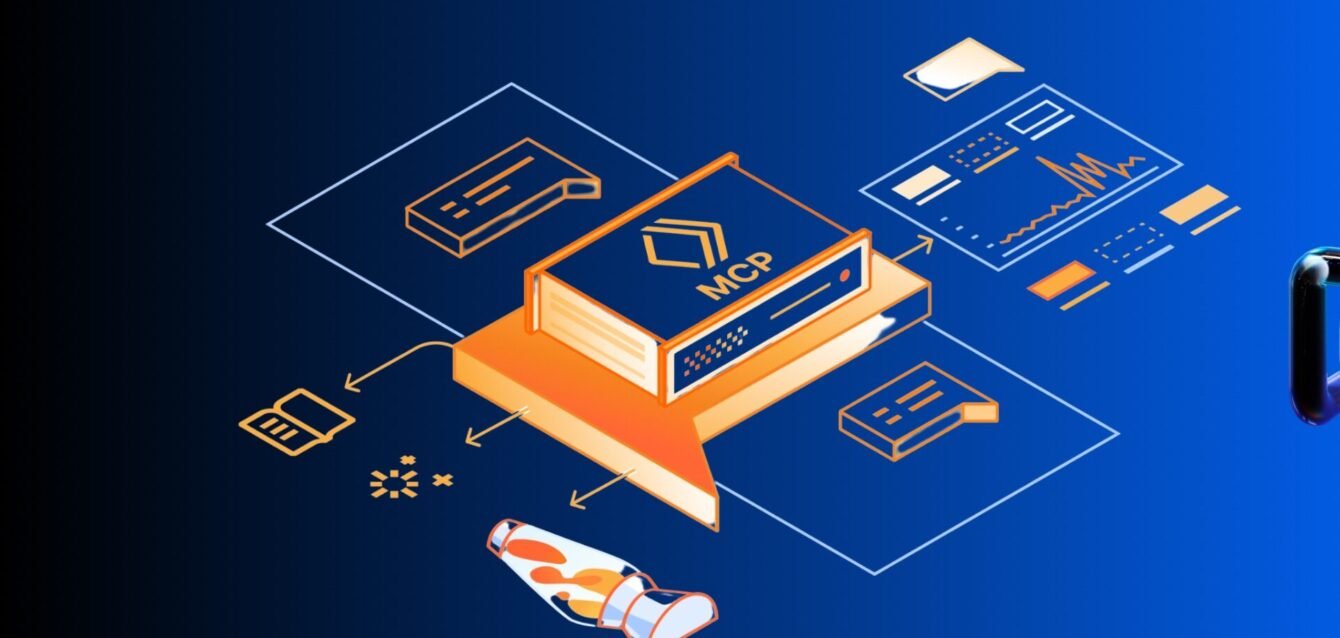
MCP comprises three key components:
1. MCP Host: The user-facing AI interface, such as a Claude app or an IDE plugin, that connects to multiple MCP servers.
2. MCP Client: An intermediary that manages secure connections between the host and servers, ensuring isolation with one client per server. The client resides within the host application.
3. MCP Server: An external program that provides specific capabilities, such as tools, data access, and domain prompts, connecting to various data sources like Google Drive, Slack, GitHub, databases, and web browsers.
MCP’s design incorporates Anthropic’s insights from their “Building Effective Agents” blog post, contributing to its effectiveness. The server side has seen significant growth, with over a thousand community-built, open-source servers and official integrations from companies. Additionally, the open-source community has actively contributed to enhancing the core protocol and infrastructure.
Server-side Primitives
The MCP Server offers three main features:
– Function: Enables servers to expose executable functionality to clients, allowing dynamic operations that can be invoked by the LLM and modify state or interact with external systems.
– Resources: Allows servers to expose data and content that clients can read and use as context for LLM interactions.
– Prompts: Predefined templates and workflows that servers can define for standardized LLM interactions.
These features are controlled differently:
– Model-controlled: Tools are exposed from servers to clients, representing dynamic operations.
– Application-controlled: The client application decides how and when resources should be used.
– User-controlled: Prompts are exposed from servers to clients with the intention of the user.
Client-side Primitives
Two essential client-side primitives are:
1. Roots: Define specific locations within the host’s file system or environment that the server is authorized to interact with. Roots establish boundaries for server operations and allow clients to inform servers about relevant resources and their locations.
2. Sampling: An underutilized yet powerful feature that reverses the traditional client-server relationship for LLM interactions. Sampling allows MCP servers to request LLM completions from the client, giving clients full control over model selection, hosting, privacy, and cost management. Servers can request specific inference parameters, while clients maintain the authority to decline potentially malicious requests or limit resource usage. This approach is particularly valuable when clients interact with unfamiliar servers that still require access to intelligent capabilities.
Use Cases of MCP
1. 3D Modeling and Design: As mentioned earlier, Blender-MCP allows for prompt-assisted 3D modeling, enabling users to create and manipulate 3D scenes more efficiently.
2. Data Analysis and Visualization: MCP can connect LLMs to data analysis tools like Tableau or Python libraries, allowing users to generate insights and visualizations based on complex datasets.
3. Automated Customer Support: By integrating with CRM systems and databases, MCP can enhance customer support bots, providing more accurate and context-aware responses.
4. Content Creation and Editing: MCP can streamline content creation by connecting LLMs to content management systems, enabling automated editing and content generation based on specific guidelines.
5. Healthcare Applications: MCP can facilitate the integration of LLMs with electronic health record systems, improving diagnostic accuracy and patient care through better data access and analysis.
Importance of MCP
MCP’s importance lies in its ability to create a more interconnected and efficient AI ecosystem. By establishing a common protocol for connecting language models with external tools and data sources, MCP eliminates the need for custom connectors, fostering a more robust and scalable environment. The community-driven approach to MCP development leads to what can be described as “compounding innovation” or “3D chess,” where each contributor builds upon the work of others, resulting in substantial network effects and increased value for all stakeholders.
Anthropic’s decision to release MCP as an open protocol reflects a strategic bet that empowering developers with an open system would lead to faster growth, more robust evolution, and greater overall value than any closed system they could develop independently. While only time will tell if this strategy succeeds, historical precedents suggest that it is a promising approach.
Conclusion
Model Context Protocol (MCP) represents a significant advancement in the field of AI, offering a standardized way for language models to interact with external data and tools. Its potential use cases span various industries, from 3D modeling and data analysis to healthcare and customer support. By fostering a more interconnected and efficient AI ecosystem, MCP not only simplifies integration but also drives innovation and value creation. As the AI community continues to embrace and develop MCP, its impact on the future of AI applications is likely to be profound.
Update 03/25/25
As of this writing, other frontier models, including Anthropic’s competitors OpenAI, Microsoft, and Google, have all announced their support for MCP as a standard. This is great news, especially when everyone plays nice and supports open-source ethics, which makes it better for everyone who develops AI.
Useful Links:
1. https://www.anthropic.com/mcp – Official page from Anthropic detailing the Model Context Protocol (MCP) and its implementation.
2. https://openai.com/blog/mcp-support – OpenAI’s announcement regarding their support for MCP and its integration into their systems.
3. https://www.microsoft.com/en-us/ai/mcp – Microsoft’s official statement on adopting MCP as a standard for AI development.
4. https://ai.googleblog.com/2024/05/google-supports-mcp.html – Google’s blog post discussing their commitment to MCP and its role in advancing AI technology.